Spring here means, amongst many other things, lots of "lost cat" posters on the telephone poles, taped to the inside of the bus stops, slapped on the bulletin boards at the supermarkets, etc. I see one and I think, "Road pizza". I just don't understand how people can let their cats run free and not expect them to meet up with, say, an angry dog, a sociopathic serial-killer-to-be (they're here, too), spilled antifreeze, etc. This being the spring, too, narcissus flowers and other deadly-to-cats plants are in full bloom.
We are in the minority because our three kitties coexist almost entirely in a small two-bedroom apartment (two bedrooms and a living room and a kitchen, actually), and while they have free access to our balcony on sunny days, they seem to prefer the greenhouse effect of our picture windows in the morning. They are healthy, and while two of them are technically in renal failure, you wouldn't know it by looking at them. Well, maybe you could guess with the Tweeb. But at any rate, our litter boxes don't stink, and except for the two weeks last year when the Tweeb got hauled to the vet and began peeing on our bed at the injustice of being the only cat subjected to such indignities, they haven't got any behavioral issues, either. There is occasional growling and hissing, but by and large the three have reached amicable terms of coexistence.
I say this to refute the old wives' tale that cats need to go outside to be happy and healthy. Noodle, who was previously allowed outside, has shown no desire to so much as be on our balcony (though his curiosity is finally starting to get the better of him--after 3 years). But now that we're in verwachting, there's another old wives' tale that we've been getting from both sides: that cats and babies can't get along, and that we'll have to send our kitties away.
First of all, not bloody likely. The cats were here first. And...well, honestly, who else could be suckered into adopting the Tweeb? Besides, there are enough videos floating around that clearly refute the so-called "fact" that cats are dangerous for babies. If anything, I could probably use the help:
But it's strange how persistent these myths are, despite the higher literacy levels in Europe, and the greater appreciation for animal welfare (especially in the Netherlands). I guess there are some things that not even science or rational thought can trump.
Showing posts with label Dutch life. Show all posts
Showing posts with label Dutch life. Show all posts
Wednesday, April 4, 2012

Saturday, March 24, 2012
Taxes: You're Doing Them Wrong

Oh. Sorry. My apologies to the Netherlands. I meant US tax forms.
Something that I never did truly appreciate up until now was how simple Dutch tax forms are to fill out. At the end of the year, most people receive a jaaropgaaf from their place of employment, which contains just four numbers. When you do your taxes in the Netherlands, you basically match up the four numbers on the forms with the four names on the online form, and (assuming you haven't made any significant investments or bought a house or had a baby) click through the entire form in about 10 minutes. If you have made significant investments/bought a house/had a baby, clicking on the box next to the scenario leads to a drop-down menu, in which you can enter in relevant data. What you do need is a working DigiD account to complete the form (it's sort of like the electronic PIN you get when you take out money for your student loans), but even that's relatively simple to arrange.
As a small business owner, though, perhaps the nicest part of doing taxes is that the Belastingdienst has made every effort to simplify the tax forms I need to fill out, to the point where, even though I don't know what half of the words mean, I can still enter in the right numbers (mostly--adding and subtracting have always been a bit iffy). And furthermore, rather than putting any onus on me to look up the right form to fill out, the Belastingdienst sent me the form, with directions, and a self-addressed envelope. It was mind-bogglingly-simple, so much so that I felt sure that in my mess of papers (looking up receipts and all makes everything a bit messy) some monster tax form was about to rear its ugly head.
Contrast this with the US: when you go on the IRS website, the section on internationals gives you a screen filled with small type, most of it highly legal-esque. Do I qualify for this exemption? Do I have to fill out that form? Clicking on the forms leads to a PDF rather than an explanation. The PDF, granted, does have an explanation: "Fill this form out if you meet conditions A, B, C, D, but not if you meet conditions E, F, G, H." It's positively Vogon-ish, compared to the simplicity of the Dutch system.
And then there's the fact that if you don't have a W2 ( = jaaropgaaf, but with more blocks and inked in bright red), you can't use the relatively simple online software to zip through your taxes. The Dutch government gets around this by (sensibly) not requiring citizens living abroad to contribute to its coffers. The US government is the only industrialized nation that requires its citizens to keep paying income taxes even though there really is no way to do it properly once you leave the land of the "free" (used ironically, as I am a woman and the uses of my uterus can be legislated by creepy white guys). Up until now, when I had been a regular working stiff, things were relatively simple, but now that I'm a small business owner (even if it goes belly-up) it gets infinitely more complicated. I'm sort-of-jokingly-considering renouncing my US citizenship, just so I won't have to deal with the IRS. Several millionaire expats have done just that, actually, since their tax burden has gotten too onerous to bear. Happily, my income falls well short of that bracket, but there's still the question of whether I can do my own taxes correctly.
Is it the government's responsibility to make things easy? I don't know, and given the vitriolic tone of recent US politics, I don't particularly care to venture an opinion. But what I will say is this: if you make it look easier, people are certainly more willing to try, and more likely to succeed. I think the Dutch government got it right: you shouldn't need an accounting degree to do your taxes properly, which is something that seems to have escaped the IRS.
Wednesday, March 21, 2012
The Word

Like zuinig or ouderwets , there is more to fatsoenlijk than meets the eye. It carries with it not only the definition of conformity, but also an extra dimension of propriety, and extra bit of "Dutchness". Anybody can offer their guest only one cookie, but it takes someone with an extra bit of fatsoenlijkheid to make the guest feel guilty about thinking of asking for a second.
Despite our relative non-conformity, though, if you live someplace long enough, something will eventually get to you. Part of redoing our apartment involved making new curtains for the small window on the side of the apartment, and I'd always envisioned a pretty, lacy inner curtain that could be drawn to reduce the sun glare in the afternoons, but still light enough to let the light through, with an opaque layer over that in case we wanted privacy in the evenings. About five hours' worth of sewing later, I assembled the curtains (Karel tacked up the hardware) and was quite pleased with the result.
At least, I was, before Karel told me the whole thing was oubollig, a word that means both fatsoenlijk and ouderwets. I still like the arrangement--the colors fit the decor and the lacy fabric is pretty and I put far too much work into the whole thing to just take it down--but I must confess that I am a bit peeved at myself: maintaining one's individuality is apparently much more difficult than I'd thought. But I suppose I could always blame the hormones.
Monday, March 12, 2012
"If I were green I would die"
Mojo is back...
 One of the hardest things to get used to about living in the Netherlands (and, I suspect, the Catholic countries) is the blue laws--the fact that everything closes on Sunday. Need a plumber? Go find the nearest patch of woods. Forgot noodles? Rice should work just as well...I think. There are a few exceptions to this: the supermarkets do tend to be open for a few select hours on Sunday now, and of course the NS and buses keep running with slightly reduced schedules (though I would recommend checking the website very carefully before travelling on Sunday--that's when the majority of maintenance happens). Museums and zoos are also open, and of course the cafes are always angling for extra business. Depending on which city you're in, you might be lucky enough to have an open library on Sunday. But by and large, if you come from a country where shopping is a legitimate Sunday afternoon activity, the mass closure of stores on Sunday can be a bit of a shock.
I'm sure other expat bloggers have written about culinary adventures that come about when you suddenly find yourself halfway through a cheese sauce and discover there's no cheese in the fridge (not that I recommend making a cheese sauce with Gouda, unless your boyfriend likes that sort of thing). But besides having learned how to deal with such setbacks--by having a freezer full of kroketten and buns--one must wonder: just what, exactly, do the Dutch do on Sundays?
If the weather is nice--if the sun is shining and not a drop of rain is in the forecast--then they lace up their walking shoes and wandelen. A few crazy sods drag out their mountain bikes and don the full Spandex regalia. Wandelen is not quite hiking--though there are some hills in this country, the terrain isn't nearly so rugged, and the paths are quite easy to follow. You have to work hard to sprain an ankle, and there's always a small cafe somewhere nearby. But it's not a stroll around the block, either, as you're in the middle of the woods/heather patch and the only sign of civilization is the whisper of a distant train. That being said, it is difficult to get too lost, and in any event, cell phone coverage is universal.
It's hard to pinpoint the Dutch attitude towards wandelen; they approach the activity with too much intensity for just enjoying nature, but not quite enough effort to qualify it for fitnessen (what you do at the gym). Unless there are small children around, they stomp away with a purpose, but the end they pursue is a mystery. Perhaps it is to burn off enough calories to justify the beer at the cafe. Or perhaps there is a collective subconscious effort to flatten out the hills even more. Or perhaps they don't quite understand how to enjoy the sunlight. God knows, it's a rare sight in the Netherlands.

I'm sure other expat bloggers have written about culinary adventures that come about when you suddenly find yourself halfway through a cheese sauce and discover there's no cheese in the fridge (not that I recommend making a cheese sauce with Gouda, unless your boyfriend likes that sort of thing). But besides having learned how to deal with such setbacks--by having a freezer full of kroketten and buns--one must wonder: just what, exactly, do the Dutch do on Sundays?
If the weather is nice--if the sun is shining and not a drop of rain is in the forecast--then they lace up their walking shoes and wandelen. A few crazy sods drag out their mountain bikes and don the full Spandex regalia. Wandelen is not quite hiking--though there are some hills in this country, the terrain isn't nearly so rugged, and the paths are quite easy to follow. You have to work hard to sprain an ankle, and there's always a small cafe somewhere nearby. But it's not a stroll around the block, either, as you're in the middle of the woods/heather patch and the only sign of civilization is the whisper of a distant train. That being said, it is difficult to get too lost, and in any event, cell phone coverage is universal.
It's hard to pinpoint the Dutch attitude towards wandelen; they approach the activity with too much intensity for just enjoying nature, but not quite enough effort to qualify it for fitnessen (what you do at the gym). Unless there are small children around, they stomp away with a purpose, but the end they pursue is a mystery. Perhaps it is to burn off enough calories to justify the beer at the cafe. Or perhaps there is a collective subconscious effort to flatten out the hills even more. Or perhaps they don't quite understand how to enjoy the sunlight. God knows, it's a rare sight in the Netherlands.
Sunday, February 26, 2012
Perfect Men
One of the many upsides to finally acquiring enough Dutch is learning how to swear appropriately, terribly, and awfully in the local tongue. Another is getting a chance to...appreciate the, ah...finer aspects of Dutch cinema.
To be sure, New Kids: Turbo can hardly count as art haus--or, for that matter, bath house. It just might make "out house"...and then only because of the scatological humor that is (mercifully) sometimes employed. Sure, there are actually good Dutch movies about important things (Komt een vrouw bij de doktor), but nobody does self-parody like the Dutch, and if you want to understand that certain segment of the population that's the equivalent of "hillbilly" in the US, look no farther than the New Kids.
Yes, it's a parody, and as such, it's highly exaggerated, full of non-sequiturs that have non-sequiturs of their own. But if you think of it as one long Jeff Foxworthy skit, it starts to make sense. Kind of. As much sense as randomly running over people can make, anyway.
Two things to note: first of all, as a parody, it is grounded in truth. How much of it is true, on the other hand...there are some gags that just aren't that funny because they are, quite sadly, completely true, such as the violence some people degenerate into when appealing (unwisely) to have their uitkering geld limits increased. Secondly, you don't realize how much you lipread until you watch a movie full of mustaches. Apparently my ability to understand the spoken word is more limited than I thought, though that might also be due to the funky accents.
Saturday, February 25, 2012
Oud Schiedam
At some point in my stay in the Netherlands, someone pressed into my hand a small glass of jenever and told me to try it. It tasted vile. Like turpentine, mixed with paint thinner, steeped in the original Listerine. Karel saw my experession of horrified dismay, and told me, "And that's why I don't drink jenever."
Jenever is gin, but since the drink received EU recognition, it can only be called jenever if it comes from the Netherlands, and two provinces in Belgium and Germany. Conversely, I have no idea if the British have trademarked "gin" for their own, but in any event, they are one and the same: juniper-berry-flavored vodka, essentially. And no city in the Netherlands is more famous for this fruity concoction than...Schiedam.

History buffs know that London did not originate as London, but rather as a cluster of villages that grew into each other. The same is true of Schiedam, and, for that matter, the entirety of the Netherlands in and around Rotterdam. At some point in history, Schiedam and Rotterdam were seperate entities, but these days, they've fused to become one, and really the only thing distinguishing them is...well, I have no idea, really.
We'd gone to Schiedam to take in the picturesque promises from the little brochure that came with Karel's order of oil lamps, and to visit the little store which sells them. It was a cloudy day when we boarded the water taxi out of Dordrecht, but boats are always a lot of fun and for some reason, even though the view was dismal for most of the trip, it was still quite an enjoyable trip. The only accepted mode of payment, if you're interested in taking it, is the OV Chip card, so make sure yours is loaded.

Once in Scheidam, we quickly discovered that it was not quite as picturesque as the brochure made it out to be. They didn't lie, exactly, about the windmills or the beauty of the Lange Haver. They just...failed to mention it was all surrounded by...Rotterdam. Nevertheless, we were here, on a rare day off together, and we were going to have fun, damn it.
"Fun" for the day ended up being a trip to the Jenever Museum, a museum showcasing the production and history of Holland's most famous drink. It's a nice little museum--you are free to poke and prod and touch and look at stuff--and in the end, you can have a nice little tipple at the bar (cost: €3 per dram of Oud Schiedam). There are those infamous "And this is how it's made" videos from the 1980s, complete with bad hair and worse beards, that can be played at the push of a button. It was no Ketel No. 1 tour, but there could have been worse ways to spend our day in Schiedam.

 As for the Oud Schiedam: it tasted like a very mild whiskey--indeed, the bartender told us that the "good stuff" (as I was already thinking of it) was aged for 3 years in old whiskey barrels, which accounted for the lovely, almost creamy taste. A far cry from the engine-degreaser that I'd tried earlier--which just goes to say that there is, in fact, jenever worth drinking. But by far the best part of the tasting was, in my opinion, the little "hat" the glass came with. The glass-with-hat can also be bought at the museum for €5--but considering that it would be a 2-hour train ride back to Nijmegen, we decided better of it.
Jenever is gin, but since the drink received EU recognition, it can only be called jenever if it comes from the Netherlands, and two provinces in Belgium and Germany. Conversely, I have no idea if the British have trademarked "gin" for their own, but in any event, they are one and the same: juniper-berry-flavored vodka, essentially. And no city in the Netherlands is more famous for this fruity concoction than...Schiedam.

History buffs know that London did not originate as London, but rather as a cluster of villages that grew into each other. The same is true of Schiedam, and, for that matter, the entirety of the Netherlands in and around Rotterdam. At some point in history, Schiedam and Rotterdam were seperate entities, but these days, they've fused to become one, and really the only thing distinguishing them is...well, I have no idea, really.
We'd gone to Schiedam to take in the picturesque promises from the little brochure that came with Karel's order of oil lamps, and to visit the little store which sells them. It was a cloudy day when we boarded the water taxi out of Dordrecht, but boats are always a lot of fun and for some reason, even though the view was dismal for most of the trip, it was still quite an enjoyable trip. The only accepted mode of payment, if you're interested in taking it, is the OV Chip card, so make sure yours is loaded.

Once in Scheidam, we quickly discovered that it was not quite as picturesque as the brochure made it out to be. They didn't lie, exactly, about the windmills or the beauty of the Lange Haver. They just...failed to mention it was all surrounded by...Rotterdam. Nevertheless, we were here, on a rare day off together, and we were going to have fun, damn it.
"Fun" for the day ended up being a trip to the Jenever Museum, a museum showcasing the production and history of Holland's most famous drink. It's a nice little museum--you are free to poke and prod and touch and look at stuff--and in the end, you can have a nice little tipple at the bar (cost: €3 per dram of Oud Schiedam). There are those infamous "And this is how it's made" videos from the 1980s, complete with bad hair and worse beards, that can be played at the push of a button. It was no Ketel No. 1 tour, but there could have been worse ways to spend our day in Schiedam.


Thursday, February 16, 2012
Care Bears

In the Netherlands, apparently, the correct response is to arrange for uitkering benefits.
Uitkering is welfare, plain and simple. It's a bit of money you get from the government so that you can still buy food, and, depending on the circumstances through which you are unemployed, pay your mortgage, provide child care, and gives you a vacation "bonus" (in quotes because, being American, bonuses are something you need to earn). The exact amount you get depends, I would imagine, upon the probability of your finding a job and whether you have any disabilities. There are, of course, rules that you must follow in order to receiver your benefits (such as not having a successful business), and frankly, I'm not even sure I'd qualify, seeing as I am healthy and sound of body and mind. But the gist here is that it seems that applying for benefits is the first thing I should have done upon receiving notice of contract expiration. No less than three people this week have asked me whether I will be applying for it. It's starting to make me wonder if I should...
But I won't, because, as I learned today, applying for uitkering could complicate starting a business considerably, and it would limit my ability to work as much as I want to, to say nothing of finding another job. Of course, I am sure there are some sneaky Dutch people who flip the bird at the rules and do whatever they want and collect uitkering money, but the government can't deport them.
Friday, February 3, 2012
Schooled

Aside: It came to my attention last week that some riders are saying that the OV system is too complicated. That it should be easier--you should just be able to get on and get off the bus without remembering to uitchecken. I get that the loss of €4 for forgetting to check out might be a hardship. But you can only do that so many times before you start remembering. Hell, if Karel can remember to check out, the rest of the world has no excuse.
Lately, though, it's come to his attention that social media might not be the pure evil that the likes of Dr. Phil make it out to be. I'm on Facebook (not under Jules, but under my real name), and I check it regularly to see what's going on in the world, to find out what my friends are reading, and in general just to keep up with people's lives. It's a nice way to keep in touch with people who I don't see frequently. It's certainly no substitute for one-on-one time, but it can keep the embers hot until everybody can get together for the marshmallow roast.
So one of these days, he might just start appearing on Facebook. And then you can ask him whether everything I write here is true, or complete bullsh*t.
Saturday, January 28, 2012
Friday Night Light
I'm not an especially literary person. My favorite books tend to be nonfiction, and I'm having a helluva time slogging through Murakami's 1Q84. The fault might be mine--I tend not to like overly "literary" literature, preferring books that just tell a story and tell it well (Justin Cronin's The Passage is a great one). I am therefore, despite my prolific blogging habits, less than inclined to try my hand at poetry.
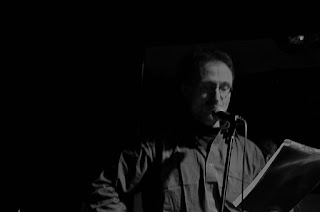
 Doesn't mean I don't enjoy poetry, though. The rhythm and flow of words lulls you into a trance and you connect with the material on an emotional level that poets spend years trying to capture, and English teachers spend years trying to teach. So when our dichter friend invited us to come see him perform his poetry at Nijmegen's Dichternacht, I couldn't wait to go. Plus, my Dutch has finally gotten to the point where I could probably understand most of the poets, provided that nobody mumbled. And as a bonus, I could try my hand at shooting people. With my camera, that is.
 It was an interesting night, full of explosive, amusing, interesting readings. I did not understand most of it--too full of Dutch-isms, I guess--but you could get the gist of the poems from the tone: meditations on the seasons, life, love, and medications, and wordplay. Something I never could understand about poetry readings, though, is the need to perform the piece. There were a few poems that needed it, but by and large I've always felt that a poem should speak for itself--if you need to gussy it up with shouting or whispers, to sing a part of it, or to read it the way Kenneth Brannagh reads Shakespeare, in order to get your point across, mayhaps you ought to choose better words, or use better punctuation. That being said, there were a few poems that were improved by foot-stomping and added rhythms, but it should be noted that the guy was a musician before he became a poet, and therefore knew what he was doing.
 The Dutch are keen to preserve their language and enjoy being artsy, so the Cafe Otis was packed with people. True to the Dutch fashion, there weren't enough seats for everyone--oh hell, there were pratcially no seats for anyone--and the bar consisted of a single long shelf of multi-colored bottles. Never mind that the Dutch language isn't really suited for poetry--the hard "g" breaks up the ebbs that the rest of the words have lulled you into. It's like having a random cymbal crashes during Smetana's Die Moldau. Working that particular phoneme into a poem so that it sounds organic is, I would imagine, the challenge of Dutch poetry.
 The other aspect about poetry nights that I find particularly irksome, as a photographer, is the god-awful lighting. I knew, going in, that it would be low lighting--these sorts of things always take place in the gloom of semi-darkness. I hadn't expected it to take place with red lights, though (reddish, not pure red, but still annoying as bugger-all). Which is why today's posts are black-and-white--I didn't think human-shaped tomatoes would be much appreciated.


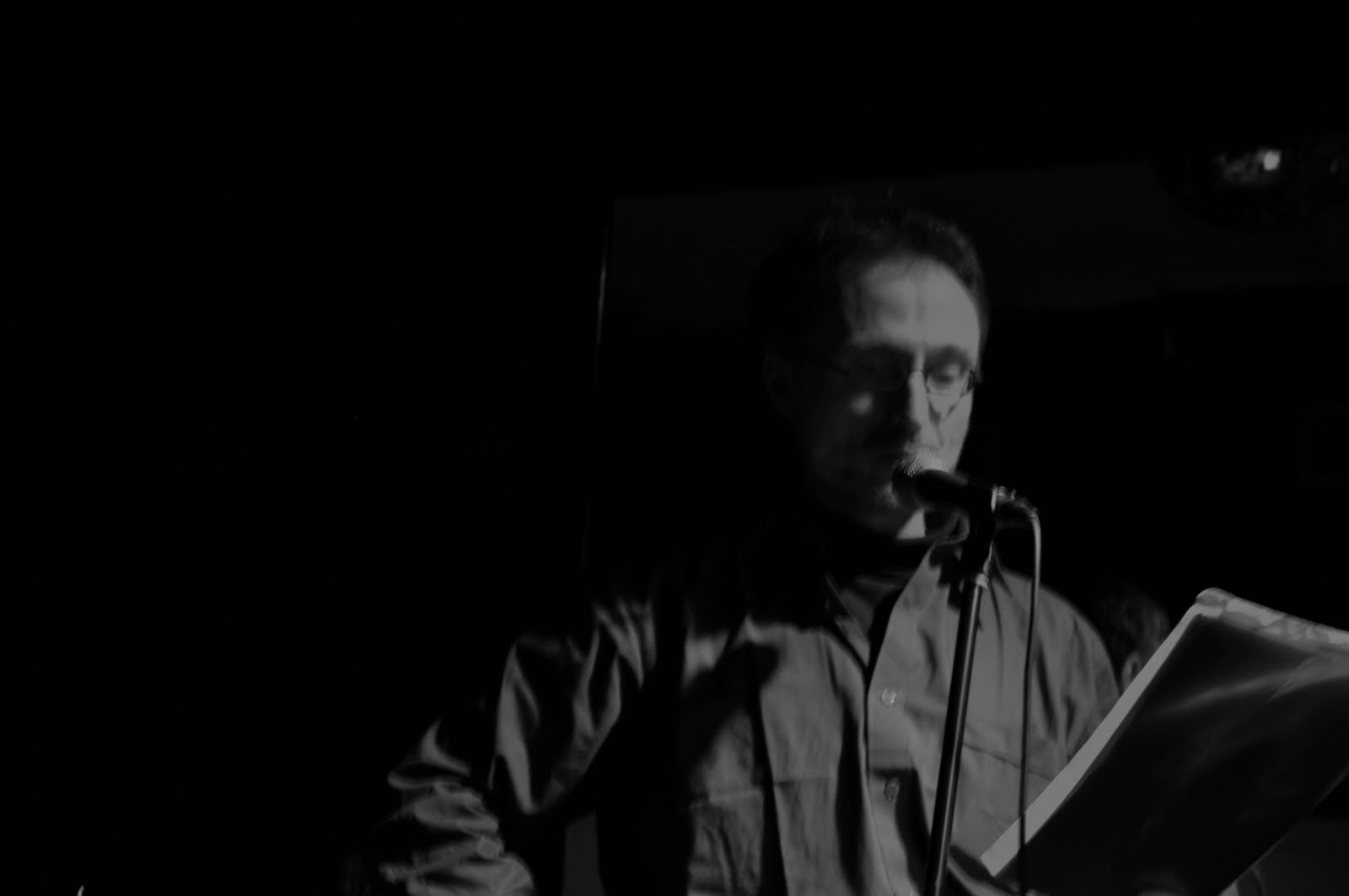
 The other aspect about poetry nights that I find particularly irksome, as a photographer, is the god-awful lighting. I knew, going in, that it would be low lighting--these sorts of things always take place in the gloom of semi-darkness. I hadn't expected it to take place with red lights, though (reddish, not pure red, but still annoying as bugger-all). Which is why today's posts are black-and-white--I didn't think human-shaped tomatoes would be much appreciated.
Friday, January 27, 2012
Pot and Kettle

But despite our propensity for fire, we do have an electric kettle. An electric kettle is basically a kettle whose sole function is to boil water. You fill it up to whatever amount you need (usually around 1 L for us), push a button, and about 2 minutes later, you have boiling hot water you can use for tea, ramen noodles, cooking, etc. It takes about 5 minutes to boil a full kettle (1.7 L), but ours is one of the lower-end models. The kettle turns itself off when it's finished. It's been such an integral part of my life that, like my sneakers, I've simply not thought to blog about them. But as I do follow a few American blogs, it struck me that these must not be espeically popular in the US, whereas they are incredibly popular in the Netherlands. I don't know of a single Dutch home without one, and I'd even go so far as to say that, across the entirety of Europe, every home has at least one electric kettle. Even in my student house in Maastricht, my suitemates kept an electric kettle in the kitchen, free for anybody to use.
I'm guessing that there are some not-entirely-unjustified concerns about safety. Water and electricity have always been an uncomfortable mix for most people. However, I would say without hesitation that, given the placement of our microwave, and the fiddliness of our gas stove, that the electric kettle is one of our safer appliances. Right next to the coffee machine, literally, where ours sits. To be quite honest, it does make some pretty scary sounds while it's bringing water to the boil, but I've never seen one, no matter how old, go on the fritz.
Or maybe it's that there's no way to sexy-up an electric kettle. You can give it whatever shape you want, make it out of titanium, add a filter, brag about how compact it is, but at the end of the day, you have to make it so that you push a button and water is boiled. It's so simple, compared to a space-age microwave or a state-of-the-art dishwasher, that I could imagine that it'd be hard to market: "It boils water! Really fast!" "So?"
Hm. That is kind of hard to sell. I guess it's one of those things you have to experience first, before you realize what an awesome thing it is.
Sunday, January 22, 2012
More than Herring

And how could it not be? The Velorama in Nijmegen, while fun and fascinating and undervisited, can't possibly hold a torch to the promise of kinkiness-to-come in Amsterdam's Sex Museum. And who doesn't want to be photographed next to Samuel L. Jackson, Madonna, President Obama, and other interesting (or not-so) of our time? Amsterdam sports team Ajax, a Waterstone's for English-speakers, and didn't get the living sh*t bombed out of it in the 40's. And whatever charms Nijmegen and it's surrounding areas might have, the spelling and pronunciation are probably a put-off to would-be visitors.
At the very least, then, I hope to have shown that the Netherlands is, believe-it-or-not, bigger than Amsterdam, and that there's a whole slew of funny and interesting things about the Dutch that you might not get if you've just been accosted by a pimp. And those of you who are looking for something less R-rated to do in Amsterdam might just consider the theater.
Dutch theater is surprsingly vibrant, which in itself is interesting considering how few people understand Dutch (relative to, say, Chinese or English). You could be forgiven for wondering whether people who speak other languages might be feeling left out while the actors on stage gesticulate and, well, act. To that end, the Toneelgroep Amsterdam has started projecting English subtitles (well, considering that the screen is above the stage, I suppose they're more accurately called "supertitles") above their Thursday-evening shows. The boventiteling is still in it's initial stages, to see if they can't get generate more interest and support in the arts. I met with their publicity coordinator when she asked me to write something about their group--and yes, they are indeed that big that they need a publicity coordinator. It's a core group of 20 actors (some of whom are also famous for being on TV--Barry Atsma, for instance), with some guest actors and some understudies. They play 350 nights of the year in Amsterdam and other cities around the Netherlands and the world, performing plays by international as well as Dutch playrights.
A resurgent interest in the arts couldn't come at a better time: over the past few years, the Dutch in general and Amsterdam in particular have gotten tired of the "hash and whores" image of the Netherlands, and are trying to rein it in. I honestly think they'd rather stamp it out altogether, but as in all things typically Dutch, the need for consensus as to how to go about it outweighs any sense of urgency to do anything about it. A revival of the arts and theatrical night life can only help.
*Disclaimer: I did not receive any payment, in kind or otherwise, for writing this. This was written purely as a favor for a cause I support. Say what you will about the NEA and the uselessness of art--that we humans have a concept of beauty needs to be celebrated, otherwise we're just another animal.
Friday, January 13, 2012
Koningin Conundrum
Life in the Netherlands is, usually for the better, pretty damn quiet. I say this because on Monday, Queen Beatrix went to Abu Dhabi and got photographed wearing a headscarf...and the flak hasn't stopped since. Immediately after the pictures were posted, Geert Wilders (yes, that Geert, Dutch-directness-become-@$$hole-ishness-personified) begain ripping on Her Majesty for "endorsing a symbol of inequality and oppression." (Approximate translation)
It is times like this that I find myself wishing for a bit of "real" news--y'know, like heads of state conspiring to teach Intelligent Design as science. Something good and proper to get riled up about, rather than this nonsense. The queen rightfully dismissed Wilders's "criticism" as "echte onzin" (nonsense), but strangely enough he has his supporters. Mostly from people who just don't get why their queen would want to visit a mosque. (Because it's a beautiful building with gorgeous artwork and historical books, maybe?)
I also find it amusing that the same people who are getting their panties up in a bunch about the queen adhering to local customs are the same ones who insist that foreigners should become completely integrated, or GTFO: They don't want the queen to adopt to local customs for a visit, but they insist that buitenlanders learn Dutch and jump for joy over Zwarte Piet. It's the kind of hypocrisy that would make for blood-boiling anger-fueled rants, if the Netherlands were just a little bigger.
It is times like this that I find myself wishing for a bit of "real" news--y'know, like heads of state conspiring to teach Intelligent Design as science. Something good and proper to get riled up about, rather than this nonsense. The queen rightfully dismissed Wilders's "criticism" as "echte onzin" (nonsense), but strangely enough he has his supporters. Mostly from people who just don't get why their queen would want to visit a mosque. (Because it's a beautiful building with gorgeous artwork and historical books, maybe?)
I also find it amusing that the same people who are getting their panties up in a bunch about the queen adhering to local customs are the same ones who insist that foreigners should become completely integrated, or GTFO: They don't want the queen to adopt to local customs for a visit, but they insist that buitenlanders learn Dutch and jump for joy over Zwarte Piet. It's the kind of hypocrisy that would make for blood-boiling anger-fueled rants, if the Netherlands were just a little bigger.
Sunday, January 8, 2012
Wind and Water

The picture taken today was of the Ooijpolder, under at least 1 m of water. The uitwaters have done their assigned tasks and flooded accordingly, but it might not be enough: the Waal flooded its banks and it's gotten to the point where the barges have been using trees and other tall objects to determine where the banks are. The Bisonbaai (alas, no nude beaches this time of year) has all but disappeared, and indeed the only indications that there ever was land in many places is the presence of treetops sticking out of the water. The most remarkable thing about the picture is that just 6 weeks ago, it was dry land--indeed, it was nearly in danger of drought--and covered with konikpaarden and those weird little cows.
The rivers in the Netherlands flow from east to west, culminating in a delta on the west coast around Rotterdam. Most of the time, whatever extra water is brought down the rivers just gets dumped out to sea, but this time, a strong northwesterly wind prevented the emptying of the swollen rivers. Add to this the near-record rainfall in December (well, it certainly seemed like a record rainfall) and you have yourself a flood in the making. The flood of 1953, for instance, was caused in part by wind gusts pushing the ocean against the already-weakened dikes. Happily, this time, there is no storm brewing (yet) and the country, while sodden, isn't in danger of drowning.
When you consider what the Dutch have had to do to the landscape to make it habitable--and that, even with 2000 years of water management behind them, flooding remains a perpetual danger--the only logical conclusion to draw is that these people are bloody crazy. Sure, the cows make great cheese and the asparagus is like none other, but I don't think anybody can say, with a straight face, that these were worth the effort, not to mention the lives of all those who drowned when the dikes didn't hold.
Maybe it's all those potatoes.

Wednesday, December 28, 2011
...Number Fifty-One

First of all: thanks for all the good wishes for my back. For the first few days it felt so terrible that I was almost certain it was a herniated disc, but after a while it became clear that it was a very bad episode of sciatica. Which is also not-fun, but also a lot less serious.
Secondly: a while ago I posted a list called, approximately, "You know you've been living in the Netherlands for too long when..." My boyfriend, upon reading that post, had a few laughs, and then began suggesting other ways to know that you've gone native: random cravings for kroketten; loving patat oorlog; and getting annoyed when people confuse Sinterklaas with Christmas.
I realize that I'm a little late to this fight--the article was posted about a day after I realized that I could no longer sit down. But any expat should have been thoroughly schooled in the difference between Sinterklaas (presents for being good) with Christmas (supposed birth of Jesus Christ--he was, I've heard, actually born in March; the bit about angels singing, though, is absolutely true), especially if you've been living in the Netherlands for as long as Ms. Olien has. Come to think on it, Americans longing to de-commercialize Christmas might take a page from the Dutch (or Spanish and/or Catholic countries) and separate the gift-giving extravaganza from the religious aspect of the holidays. Sinterklaas is shamelessly commercialized; Christmas is a night for fancy foods and family. While gifts are exchanged on Christmas, retailers don't make a big fuss about impending Christmas doom (the Dutch do that to themselves--a weird sort of conformist guilt).
But what I really wanted to write about was the irritating business of calling Holland's Zwarte Piet a racist construction. Which it is, but in the grand scheme of things, it ranks (in my mind) as a relatively mild offense, somwhere along the lines of Prince Willem-Alexander unwittingly swearing to his Mexican audience. Why is this? Because NOBODY (except maybe small children) believes that Sint en Piet are real. They are no longer caricatures--they are characters in a nice little story line that gets told to kids every year. Zwarte Piet, it is true, began as a bumbling servant to Saint Nicholas--if you go back to the original-original story, he was a Moorish convert to Christianity who elected to serve the saint out of gratitude for having a shot at obtaining Grace. But Saint Nicholas has also gone through his own rebranding: Sint, in days of old, ran what was essentially a labor camp for bad children in Spain, and would literally beat the bad ones (try getting that one into a PC-classroom these days). These days, Piet is the one with all the awesome magical powers, and Sint just leaves a lump of coal in your shoe.
"Yes, the story changes, but that doesn't make it any less bad," some people might say. "It's still wrong to put on blackface. Intents don't matter."
I would argue, however, that intention matters every bit as much as the act itself. If not, then movies such as Ghandi, Memoirs of a Geisha, The House of Sand and Fog, and The Good Earth would be deemed terribly offensive (and maybe they were, by some, but I think it's safe to say that, since these are all mainstream movies, they're probably well-acclaimed in most circles). In two of them, the venerable Ben Kingsley gets a tan and magically becomes India's greatest 20th-century hero, or an Arab-American trying to scrape by. Memoirs of a Geisha was noticeably devoid of any lead character who was actually Japanese, while The Good Earth cast Paul Muni (Eastern European, and Jewish to boot) as a Chinese farmer. The outrage at Zwarte Piet and lack of outrage over these characters is, I would argue, also a form of racism: what is it that makes black people exempt from being portrayed by people of other races, but perfectly okay for people of other races to portray people of other races?
Suffice it to say, I stand by my original assertion that as far as racist imagery is concerned, the US has a lot more to answer for than just a bunch of silly white people putting on makeup and handing out kruidnoten to the kids. And that, as far as discrimination and race go, it's not all black-and-white. Literally.
Monday, December 5, 2011
Sugar and Spice

Despite my reputation in certain circles for calorically-dense baked goods, in my everyday cooking (what I do of it), I don't really pack fats or sugars into my food. Most days, I make it a point to avoid sugar, though I do enjoy a Milk Break during morning coffee breaks, and some cookies with my nightly dose of St. John's Wort (it's seriously vile stuff, otherwise). But Dutch cookies are, for the most part, not very sweet--two Milk Break biscuits have only two-thirds the sugar of three Oreos--and, perhaps more relevant to healthy eating, don't contain high-fructose corn syrup.
I see this as a confirmation of Robert Lustig's theory that fat (consumed in modest amounts) doesn't make you fat, fructose makes you fat. Most Americans who are reasonably educated about nutrition and good eating are appalled at the quantity of carbohydrates the Dutch consume: bread in the mornings, sandwiches for lunch, ontbijtkoek with coffee, and a stamppot loaded with bacon bits for dinner. The terrible nutritive state of your average cloggie is only emphasized by little news bits such as this one, saying that your average child manages to eat only one piece of fruit every week, while your average Jap eats one-and-a-half--while the recommended serving is two. That's two pieces of fruit per week. I don't know which is more appropriate, being shocked that it's so low, or amazed that scurvy isn't an issue any more.
Edit: Frank has now pointed out that the DutchNews site I referenced is a terrible source for facts and that the actual recommendations were for 2 pieces of fruit per day. So really, the Dutch don't do that badly. But it says a lot that I was willing to believe "per week", don't it?
But while most Dutch food is stacked to the ears with starches (simple or otherwise), there isn't any high-fructose corn syrup hidden away in most of it. I've tried to find a food that has high-fructose corn syrup in it, and despite my best efforts, I've failed. I'm certain that sodas, such as Coca-Cola and Pepsi, are fairly loaded with it, but the fact that I don't know for certain just goes to show how frequently it occurs to me to buy it (which is never). Even the fluffiest of fluffy white breads contains flour, water, yeast, and maybe a preservative and maybe a vitamin supplement--but no fructosestroop, as it's called in Dutch. The powdered soups that I have regularly for lunch, the sauces that you can buy for your patat frites, the cookies stuffed with marzipan and glazed with sugar--they might all have sugar, it is true, but they probably don't contain HFCS.
Of course diets and lifestyles and national trends and nutrition are more complicated than simply not having HFCS in anything. And who knows, maybe the Dutch would keep their elongated physiques even if HFCS were added to their diets (hell, I caught whooping cough here, and I've been vaccinated against it in the US). Genetics, environment--who knows? Our weekly pot of spaghetti, at any rate, hasn't seemed to do us any harm yet.
Saturday, December 3, 2011
Allerhande Everywhere

Every two months or thereabouts, the Albert Heijn publishes another edition of its in store magazine, the Allerhande. Like most free publications, it has more ads than content, and, as expected, is geared to "help" you make budget-conscious and nutritious meal choices for your family--by shamelessly plugging Albert Heijn products whenever and wherever they can. Nevertheless, it is one of the few things that suits my Dutch reading level--hindered more by my lack of patience than my lack of understanding--as the articles in it are short and brief and there are lots of excellent pictures of food. Though stamppot never did manage to look sexy.
The Allerhande is stuffed with recipes: 10 ways to make soup! 15 ways to make stamppot! A week's worth of dinner ideas! Special (but easy) recipes for the holidays! These recipes are not especially complicated, and they actually produce quite a decent meal--what I like to think of as "in-law" level food; as in, something you'd serve your in-laws to show that you can cook, but not something so delicious that they'll want to invite themselves over every day. Much though I love my almost-in-laws, our apartment is small, and stressing about food is something I hate doing.
I am a rather lazy cook, to tell the truth. I'll cheat whenever I can, and there have been days (mostly when Karel's working) that I've taken a can of something from our pantry, and a fork, and called it a meal. It's not that I don't enjoy the process of cooking. It's more that it takes me a while to get into my little groove, and most days I just don't have the time to settle into a rhythm. Karel, on the other hand, loves cooking, but his work schedule is so erratic that we might manage to have dinner together once a month.
But next week, Karel is at home. And that means lots of good eats...based entirely on stuff out of the Allerhande. Even the stamppot that we'd decided to make came out of the Allerhande, and with the sole exception of our weekly spaghetti, there isn't a single recipe on it that we've thought of ourselves. It'll be a strange week, full of food that we wouldn't normally eat--zuurkool and pompoen and spitskool and paddenstoelen fond (actually, the recipe called for a bouillon, but I couldn't find it). That I am actually looking forward to eating these very Dutch things is a bit scary. But not nearly as scary as the thought that, if we like the things, and if they aren't too terribly complicated to make, we might actually start depending on the Allerhande for future meal suggestions.
Sunday, October 30, 2011
On the Old Sand Dunes o' Mook

I wonder if there's a song of the same title, because it seems like there ought to be one....
Anyway, in the Netherlands, the landscape is dotted with patches of forest that people ride and run and walk their dogs in. Sort of a cross between a wildlife preserve and a public park, these spaces are further puncutated by sandy clearings, where heather grows. This is a sign that, in days of old, sheep had overgrazed the land, and the sand dunes had taken over. To give you an idea of how bad the problem got, Jasper (our ecologist friend) recounted sandstorms blowing off of these dunes. Heather is about the only plant that will grow in sands like this, and indeed, the fact that sandstorms are so rare these days in the Netherlands is because the sand spots are covered with it. That, and grazing policies have been changed to reflect the growing collection of ecological wisdom.
The area between Mook and Molenhoek, then, has what's called de Mookerheide, a vast collection of sand dunes with nothing but heather and sand grass growing in it. I call it "vast" because it certain looks that way when you get there, after putzing about through the typically-artificial bos. Indeed, getting there is a bit of an epic, a nice little adventurous jaunt on a sunny day: for me, on my bike, it starts with following the Veolia tracks south, until we reach 't Zwaantje (a little charming restaurant) and turning right. At first there are some pasturelands, but then the woods start to close in and at some point the road becomes a dirt road. Pressing on, despite the risk of a flat, eventually puts you in front of a massive fence, at the foot of a hill. Walk up the hill, and the picture today is what greets you.
But in fact it's not really all that big. You can scramble around the whole thing in about an hour, two if you stop and take photos of everything. And "scramble" here is definitely the right word, because some of the inclines are steep--even worse than the Manayunk Wall, and because the whole place is just a collection of sand dunes, it can be rather treacherous. Supposedly there are also special cows grazing on the land--the kinds of cows that the Dutch use as wildlife management--but I've yet to see one there (they're all over Millingerward and the Bisonbaai).
The Mookerheide is, for obvious reasons, a favorite spot for the people who live nearby. On clear days you can see Cuijk, which has a cathedral with two towers. The whole place is really quite lovely and I'd encourage anybody who thinks that the Dutch are all about polders to come and take a wander. It's surprising how hilly some spots can be.
Wednesday, October 19, 2011
Young and Dumb

For those of you wondering: yes, that's a kid inside a giant airtight ball running around on a pool of water. Yes, parents actually pay money to let their kids do this. No, I don't know any, personally, but obviously they exist. And no, I don't know why this hasn't struck anybody else as a terrible idea.
I will be turning thirty at an unmentioned time later this year, and much to my surprise, I really don't feel much older than I did when I was twenty. To be sure, I don't stay up all night anymore (not that I did that much when I was in college), but there are nights when I go to bed at around midnight and get up at around five. Besides my perpetually-knotted shoulder, I don't have any aches and pains, and while I have some stray white hairs, I still pass for someone in her mid-twenties, an image that is only reinforced by the fact that I Rollerblade to work whenever the weather and roads cooperate.
I mention this because my mother, in perhaps what could be called a midlife crisis, has recently started asking me in every conversation whether I feel old, because she certainly does, etc etc, [litany of aging problems here]. I always tell her no, because, well...I don't. And it's hard to feel old in the Netherlands, because no matter how tired you are, how achy you feel, it's terrible form to be passed by a little sweet oma with her basket of leeks and potatoes on the back of her bike. When you have that as your standard for what you should be capable of when you're eighty, a sore shoulder from hoisting kitty litter doesn't seem nearly so terrible.
While there are nursing homes for the elderly, they tend to be inhabited by those who, for whatever reason, have lost the ability to live on their own. If you've got two legs and can make yourself a pot of tea, apparently, you're good to go. Karel's dad, who is nearing eighty, still lives on his own--he walks his dog twice a day, shoots a shotgun longer than I am tall and stocks his freezer with his own game, and is a regular at many dinner tables. Granted, he does have a housekeeper, but there's a long/complicated/personal story that I won't get into. The gyms, likewise, are full of retirees that are "sporting", as the Dutch say. On beautiful days like on Sunday, the woods are practically crawling with people--young and old alike--taking advantage of the beautiful weather to get some exercise and catch a few rays.
Maybe it's naive of me to think that I'll feel this way forever. After all, I haven't been fifty yet. On the other hand, I must wonder how much of my parents' experiences of getting older has been shaped by their relative isolation and life in suburbia, living in a neighborhood surrounded by yuppies with kids. Me? I say, no little old oma is going to pass me for a long time, yet.
Sunday, October 9, 2011
Phat
Every now and again I get into a discussion with my sister or mother about the relative benefits of socialism (the Netherlands) versus the insane clown posse that is the US at this moment. It is a peculiarity of the Dutch that, while a lot of things are regulated (i.e., setting out your trash), because everybody does them at the same time, it doesn't feel like it's regulated. The flippant part of me says, "It's the hive mind at work," but on the other hand it's probably the main reason why the Dutch stand for as many regulations as they do.
Something that is common in Europe and the rest of the world, then, is to regulate the advertisements directed at kids, most especially for unhealthy foods. It seems like a common-sensical health measure: the less kids want sugary/fatty/salty foods, the less they'll eat, and the healthier they are. This is not the case in the US, as the film makes clear: and consequently kids grow up with an emotional attachment to a particular brand, basically guaranteeing a customer for life.
In the Netherlands, then, most food ads are geared at adults, and feature relatively healthy food: stamppot met worst, soups, or pasta. TV spots for foods like sweet breakfast cereal are nonexistent--the sole exception is the Nutella spot, but I don't think I've ever encountered a Dutch breakfast spread that included Nutella. It seems to be eaten at every other time of day except breakfast....And of course, you have McDonald's and Burger King ads. But I don't think you could escape those, unless you moved to Patagonia.
The ubiquity of tall skinny Dutch people would seem to indicate that these measures work. But on the other hand, Dutch food culture is extremely zuinig: breakfast is a slice or two of bread-and-something, with coffee, or a small cup of milk or juice. Lunch is a sandwich, and maybe a cup of soup if you're feeling very decadent. More typically, it's a sandwich with an apple or an orange. Dinner will include a starch and a protein and a vegetable--there may be a glass of wine or a beer, but dessert isn't typical.
So, which is the deciding factor in the battle against the bulge in the Netherlands? Culture, or law? It's hard to say, really. But it's easy--a little too easy, so easy I don't really believe it myself--to point at the US and say that that's what happens to people when they have neither.
Something that is common in Europe and the rest of the world, then, is to regulate the advertisements directed at kids, most especially for unhealthy foods. It seems like a common-sensical health measure: the less kids want sugary/fatty/salty foods, the less they'll eat, and the healthier they are. This is not the case in the US, as the film makes clear: and consequently kids grow up with an emotional attachment to a particular brand, basically guaranteeing a customer for life.
In the Netherlands, then, most food ads are geared at adults, and feature relatively healthy food: stamppot met worst, soups, or pasta. TV spots for foods like sweet breakfast cereal are nonexistent--the sole exception is the Nutella spot, but I don't think I've ever encountered a Dutch breakfast spread that included Nutella. It seems to be eaten at every other time of day except breakfast....And of course, you have McDonald's and Burger King ads. But I don't think you could escape those, unless you moved to Patagonia.
The ubiquity of tall skinny Dutch people would seem to indicate that these measures work. But on the other hand, Dutch food culture is extremely zuinig: breakfast is a slice or two of bread-and-something, with coffee, or a small cup of milk or juice. Lunch is a sandwich, and maybe a cup of soup if you're feeling very decadent. More typically, it's a sandwich with an apple or an orange. Dinner will include a starch and a protein and a vegetable--there may be a glass of wine or a beer, but dessert isn't typical.
So, which is the deciding factor in the battle against the bulge in the Netherlands? Culture, or law? It's hard to say, really. But it's easy--a little too easy, so easy I don't really believe it myself--to point at the US and say that that's what happens to people when they have neither.
Sunday, September 25, 2011
Weekend Silliness
While checking out Breigh's blog at Canadutch, I came upon an entry from a few days ago that was something along the lines of "You know you've been living in the Netherlands for too long when..." It was mildly amusing, but as it was plainly posted by a bunch of semi-drunk 19-year-olds on their first study-abroad trip, only a few of the 100 points listed actually applied to people who really have been here for too long. Mark Twain's snide remark about experts being people who've lived somewhere for two days or twenty years clearly applies here.
In any case, you (really) know you've been living in the Netherlands for too long when/if...
1. You covet (or own) a bike made by Gazelle
2. You swear with "Godverdomme" instead of "f*ck"
3. Lunch without a sandwich feels incomplete
4. You no longer need to improvise with dinner on Sundays
5. Frites zonder feels empty and sad
6. You have a favorite stroopwafel vendor
7. "Parking" refers to bike rack space
8. You feel vaguely guilty for skipping a day of housekeeping
9. Tipping is no longer second-nature
10. You know to avoid kroketten and go for the frikandel
11. You know how to eat a tompouce
12. You know what a tompouce is
13. You've gone out wearing leggings-and-boots, or t-shirt-and-blazer
14. You know more about Willem and Maxima than you do Sasha and Malia
15. There are more than one pair of huis sokken in your sock drawer
16. You write time in a 24-hour system, and dates day-month-year (Americans only, this)
17. A "good" lunch means Cup-a-soup...Special
18. You have a favorite apple--bonus if it's Elstar
19. You have a recipe for pea soup (conditional, upon inclusion of vetspek)
20. You have ever bought something off marktplaats.nl
21. You have ever sold something on marktplaats
22. You start getting prepositions confused
23. Your weekly dinner menu includes "meat/veggie/potatoes" more than once. Bonus points if it gets mashed together into stamppot.
24. You have a scarf for every season (men, too!)
25. Nordic walking is a sport
26. Life without an electric kettle is unimaginable
27. "Watching sports" includes speed skating, darts, and dressage
28. The year 1953 explains everything
29. You still pull the door even though the sign says "Duwen"
30. You shop at a store that's been going out of business for years
31. You've ever used "the NS was late" as an excuse
32. You despise Geert Wilders
33. Keeping an orchid is a tour de triomphe
34. The need for consensus begins to outweigh any sense of urgency
35. A sales rep sold you a better deal than what you'd originally wanted
36. An empty day in your agenda throws you into despair
37. You have a photobook printed by the Albert Heijn
38. You are over fifty and still dying your hair
39. You never go into town on Queen's Day
40. You have an orange vuvuzela
41. You make visiting friends try Hollandse Nieuwe even if you don't like it yourself
42. When you see someone buying magere melk, you think they're American
43. You know where the hotel bought their furniture from
44. You can tell the difference between Dutch, Limburgse, and Fresian
45. You know where to find baking soda
46. You have a shopper
47. The thrift store owner knows you on sight
48. You get a free sample of 0.0% beer because it's free, even if you hate the stuff
49. You have a bag hanging by the door for shopping with
50. You never leave home without an umbrella
In any case, you (really) know you've been living in the Netherlands for too long when/if...
1. You covet (or own) a bike made by Gazelle
2. You swear with "Godverdomme" instead of "f*ck"
3. Lunch without a sandwich feels incomplete
4. You no longer need to improvise with dinner on Sundays
5. Frites zonder feels empty and sad
6. You have a favorite stroopwafel vendor
7. "Parking" refers to bike rack space
8. You feel vaguely guilty for skipping a day of housekeeping
9. Tipping is no longer second-nature
10. You know to avoid kroketten and go for the frikandel
11. You know how to eat a tompouce
12. You know what a tompouce is
13. You've gone out wearing leggings-and-boots, or t-shirt-and-blazer
14. You know more about Willem and Maxima than you do Sasha and Malia
15. There are more than one pair of huis sokken in your sock drawer
16. You write time in a 24-hour system, and dates day-month-year (Americans only, this)
17. A "good" lunch means Cup-a-soup...Special
18. You have a favorite apple--bonus if it's Elstar
19. You have a recipe for pea soup (conditional, upon inclusion of vetspek)
20. You have ever bought something off marktplaats.nl
21. You have ever sold something on marktplaats
22. You start getting prepositions confused
23. Your weekly dinner menu includes "meat/veggie/potatoes" more than once. Bonus points if it gets mashed together into stamppot.
24. You have a scarf for every season (men, too!)
25. Nordic walking is a sport
26. Life without an electric kettle is unimaginable
27. "Watching sports" includes speed skating, darts, and dressage
28. The year 1953 explains everything
29. You still pull the door even though the sign says "Duwen"
30. You shop at a store that's been going out of business for years
31. You've ever used "the NS was late" as an excuse
32. You despise Geert Wilders
33. Keeping an orchid is a tour de triomphe
34. The need for consensus begins to outweigh any sense of urgency
35. A sales rep sold you a better deal than what you'd originally wanted
36. An empty day in your agenda throws you into despair
37. You have a photobook printed by the Albert Heijn
38. You are over fifty and still dying your hair
39. You never go into town on Queen's Day
40. You have an orange vuvuzela
41. You make visiting friends try Hollandse Nieuwe even if you don't like it yourself
42. When you see someone buying magere melk, you think they're American
43. You know where the hotel bought their furniture from
44. You can tell the difference between Dutch, Limburgse, and Fresian
45. You know where to find baking soda
46. You have a shopper
47. The thrift store owner knows you on sight
48. You get a free sample of 0.0% beer because it's free, even if you hate the stuff
49. You have a bag hanging by the door for shopping with
50. You never leave home without an umbrella
Subscribe to:
Posts (Atom)