Showing posts with label money. Show all posts

Monday, March 26, 2012

Zoom zoom zoom

My opinion about cars--that they're expensive to keep and pointless in an urban environment with good public transit--has been validated. It would have been more interesting to see what the Millenials, as they are called in that article (I count myself slightly older, but Millenial-ish enough), have to say about not owning cars, but I do find it cute that GM thinks twenty-somethings watch MTV. Cute, and terribly misguided: it doesn't matter how cool the paint job is, at the end of the day, the damn car still costs half a year's salary for someone just starting out. And half a year's salary buys a lot of girls' nights out, karaoke--or day care.

On this side of the pond, cars tend to be smaller, and the possibility of getting a cheap, new car is far greater, as you have a lot more brands to choose from. Even the luxury cars (the sexy black Opels or the zippy Alfa Romeos) are not more than €30,000--the advertised prices say "starting at €25,000). The "starter" cars, which is what Karel would be getting if he were purchasing a new car (which he isn't), are a scant €6000, and most cars fall somewhere around €10,000 when new. Of course, you have a 14% sales tax that doesn't get factored into the advertised price, plus a "road use" tax depending on the size of your car, plus a tax you pay for the emissions, plus...well, you get the idea. Many Dutch people actually go over the border to buy their cars, thus avoiding the 14% tax, though when they bring it back to the Netherlands, registering it kicks all of the other taxes into motion. Gotta love the one-currency economy.

But Karel is set on getting a car this year, despite the astronomical--even by Dutch standards--gas prices (currently at around €1.80/liter). And I can't say "no" to his wanting to cut his commute time in half. Nor can I argue with the fact that dragging a little bambino on the train is a bad idea. Nor can I argue with the appeal of a long weekend in Luxemburg.

Even so, it is a significant purchase for us, and I completely understand the trepidation Millenials feel at the thought of committing to what must seem like a lifetime of payments--for maintenance, for gas, for insurance (which we also have to pay for, on top of the taxes mentioned above)--when they're already in indentured servitude for their student loans. At this point, it's more of a necessary evil than a burning desire.

People used to buy cars because it cemented their status--as cool kids, as grown ups, as whatever was "in" at the moment. Now, people buy cars because they have to--because status these days is owning an iPhone, writing with fountain pens, and shopping at farmers' markets. Cars, for all the auto industry's progress (or lack) in cutting emissions and becoming more fuel-efficient, are simply at odds with what's cool.

Saturday, March 24, 2012

Taxes: You're Doing Them Wrong

Now that I've officially begun as a freelancer (photography is but a subset of what I do--the main bread-and-butter operation is copyediting), I enter the world of Dutch tax forms and all their insane, crazy, and confusing glory.

Oh. Sorry. My apologies to the Netherlands. I meant US tax forms.

Something that I never did truly appreciate up until now was how simple Dutch tax forms are to fill out. At the end of the year, most people receive a jaaropgaaf from their place of employment, which contains just four numbers. When you do your taxes in the Netherlands, you basically match up the four numbers on the forms with the four names on the online form, and (assuming you haven't made any significant investments or bought a house or had a baby) click through the entire form in about 10 minutes. If you have made significant investments/bought a house/had a baby, clicking on the box next to the scenario leads to a drop-down menu, in which you can enter in relevant data. What you do need is a working DigiD account to complete the form (it's sort of like the electronic PIN you get when you take out money for your student loans), but even that's relatively simple to arrange.

As a small business owner, though, perhaps the nicest part of doing taxes is that the Belastingdienst has made every effort to simplify the tax forms I need to fill out, to the point where, even though I don't know what half of the words mean, I can still enter in the right numbers (mostly--adding and subtracting have always been a bit iffy). And furthermore, rather than putting any onus on me to look up the right form to fill out, the Belastingdienst sent me the form, with directions, and a self-addressed envelope. It was mind-bogglingly-simple, so much so that I felt sure that in my mess of papers (looking up receipts and all makes everything a bit messy) some monster tax form was about to rear its ugly head.

Contrast this with the US: when you go on the IRS website, the section on internationals gives you a screen filled with small type, most of it highly legal-esque. Do I qualify for this exemption? Do I have to fill out that form? Clicking on the forms leads to a PDF rather than an explanation. The PDF, granted, does have an explanation: "Fill this form out if you meet conditions A, B, C, D, but not if you meet conditions E, F, G, H." It's positively Vogon-ish, compared to the simplicity of the Dutch system.

And then there's the fact that if you don't have a W2 ( = jaaropgaaf, but with more blocks and inked in bright red), you can't use the relatively simple online software to zip through your taxes. The Dutch government gets around this by (sensibly) not requiring citizens living abroad to contribute to its coffers. The US government is the only industrialized nation that requires its citizens to keep paying income taxes even though there really is no way to do it properly once you leave the land of the "free" (used ironically, as I am a woman and the uses of my uterus can be legislated by creepy white guys). Up until now, when I had been a regular working stiff, things were relatively simple, but now that I'm a small business owner (even if it goes belly-up) it gets infinitely more complicated. I'm sort-of-jokingly-considering renouncing my US citizenship, just so I won't have to deal with the IRS. Several millionaire expats have done just that, actually, since their tax burden has gotten too onerous to bear. Happily, my income falls well short of that bracket, but there's still the question of whether I can do my own taxes correctly.

Is it the government's responsibility to make things easy? I don't know, and given the vitriolic tone of recent US politics, I don't particularly care to venture an opinion. But what I will say is this: if you make it look easier, people are certainly more willing to try, and more likely to succeed. I think the Dutch government got it right: you shouldn't need an accounting degree to do your taxes properly, which is something that seems to have escaped the IRS.

Monday, September 5, 2011

Fluff 'n Stuff


So about two weeks ago, the Tweeb got sick and we dragged her to the vet for observation and treatment. What I didn't tell you is that, when she came back from the vet, she promptly had her vengeance, and wet the bed. And pooped in it. Twice.

Needless to say, the peas who sleep in this pod were not amused. The bed got stripped, and everything that could be sent to the cleaner's was sent--it wasn't that stinky, truth be told, but since Karel has rarely had his comforter cleaned, we decided that it was time. The cleaner's around here typically charges by weight, but they have special pricing methods for comforters and pillows. It ended up costing close to €50 for everything to be cleaned, but we counted the money as worthwhile, knowing that everything was pee-free and dust-mite dandy.

At least, until I started sleeping in it.

My allergies raised unholy hell that first night we got the covers back. In the mornings, I'd make the bed and then end up taking to it, because I'd sneeze myself into exhaustion. Y'know how your body sometimes knows how to avoid things that you don't necessarily know? For the last few nights I'd been falling asleep on the couch, and then moving to the bed--hoping, I suppose, that once there I'd resume sleeping, rather than suffer the art of falling asleep while my sinuses got progressively more clogged. And to top it all off, the Tweeb peed on the comforter--not on the bed, which was unmade, but she actually went out of her way to wee on the thing--again on Wednesday. Sunday's bed-piddle was the last straw. I did what any self-respecting person would do with a cat that doesn't respect their property.

I went and bought new bedding, of course. In light of the fact that Karel's bedding is older than our relationship, it was probably just as well. The original idea was to go to IKEA and get a new mattress as well, but the new "luxe" mattress protector adds enough plushy-squishy feeling that Karel was happy enough to have that. But I'm happy to say that, after some apprehension, I was able to climb into bed last night, and sleep.

Tuesday, April 19, 2011

Plastic creep


On the list of "You know you're going Dutch when" includes such things as: waiting for a parking space--for your bike, cruising Marktplaats.nl for furniture, and wearing leggings-and-boots (ladies) or blazer-and-t-shirt (gents). Women, in particular, will carry purses that can outfit an entire army platoon, and sometimes does--Karel tells me that, on more than one occasion, when he was little, his mother would pull out a sweater from her purse for him.

But perhaps one of the definitive "You know you're going Dutch" signs is having an Albert Heijn card. As one of the most ubiquitous supermarkets, what makes the AH (pronounced "ah-ha") unique in a land of penny-pinchers is that it's actually not the cheapest, and the generic supermarket brand of stuff is a cut more expensive than the truly generic stuff. Actually, the last is not unique to the AH, and I've noticed the same at the C1000. The difference is that you don't mind it at the AH, but you do mind at the C1000, and I think it's because the packaging of C1000 stuff looks so tacky cheap, and if you check the price, you expect it to be lower than it is.

One of the first things integrated expats will have learned is that getting a Bonus Card will save you lots on your groceries. This little piece of plastic lets you take full advantage of sales, and get the lowest prices on items marked with a "BONUS" sign. Whether or not it's actually the lowest price you can find is debatable, and framed by the greater question of whether it's worth the twenty-minute bike ride in the other direction to find out.

About three years into my stay here, the Bonus Card was joined by my Ringfoto card, where I'd bought my DSLR. 1% cash back made sense at the time: I'd spent about €1500 over one month for all the stuff associated with a DLSR, and that netted me a set of free prints. Since then, it's not seen much action at all.

Then my boyfriend went on a survivalist kick and procured a Bever Zwerfsport card: Bever is kind of like REI in the States, selling fashionably styled Gore-tex--because we all know that, when you're in the middle of nowhere, pink is "in". But they also carry a lot of really handy things, like water bottles and (good) flashlights, carabiners, heavy-duty walking shoes, climbing gear, and Sporks (handy for lunch). Why do I have it, if he's the survivalist? Because he never remembers his :-D

We didn't mind: Outdoor gear and photo prints aren't things we get regularly, and the time between purchases is long enough to allow us to forget that we'd signed away our annonymity for 25% off retail price. We don't buy from those stores often enough to be considered "valued customers". If it'd just stopped there, we would have been golden.

But I draw the line at Kruidvat. Kruidvat is sort of like a cross between a dollar store and a CVS--it's always fun to browse the crap racks in the back of the store, because every now and then something nice will pop up. It's where I buy things like shampoo, so I go there pretty frequently, the better to stock up on name brands at generic prices. Imagine my surprise, then, when the cashier did not ring up the price on the sign, but something in between the advertised price and the full price. When I pointed out this discrepancy, she merely handed me the flyer for a Kruidvat card. "Use this to get the full discount."

I'm not sure why this annoys me so much. It's not like you have to give out your bank information with anything--unlike a credit card, these are basically just bar codes that get scanned at the time of purchase. Maybe it has to do with my ego asserting itself, saying, "I'm ME, not Every Other Dutch Dude." Maybe it's because my wallet is that much heavier. Maybe it's that the Kruidvat card is so virulently red--and that's just the one side; the other side is silvered, so that it can reflect "your smile when you see how much you've saved". Because really? Who smiles at a bottle of shampoo?

Saturday, March 19, 2011

Virtue, explained


The quick 'n dirty translation of the Dutch word zuinig is "frugal". As with many Dutch words, though, the quick 'n dirty version is incomplete. There is, in addition to the "maximizing value" component of zuinigheid, an element of virtuousness that the word "frugality" doesn't quite cover. In the US, you can still get slammed for being frugal, as it has the connotation of being cheap. In the Netherlands, you will only get nods of approval for being zuinig.

This extra dimension explains, I think, the popularity of the Saturday markt (in all cities except, I am told, Maastricht). There are market days throughout the week--in Nijmegen, for instance, you have the fabric and produce markt on Mondays, and the secondhand markt on Wednesdays. But the Saturday markt is where all of the action is--it's when all of the vendors and their kramen line the main shopping streets, when the booksellers set up shop outside the library, when anybody with any bit of Dutch in their blood crowds onto the 10 a.m. bus or busts out their fietskar in the hopes of landing good deals.

Anybody can be thrifty by reading the flyers at the supermarket and shopping accordingly, but it takes serious dedication and price-matching to find the best deals at the Saturday markt. Not to mention that many places are cash-only, so you can't say, "What the hell," and let yourself overdraw. There are some things you can help yourself with, and others that you can't--generally speaking the rule is "arm's length", but the Dutch have very long arms. During the busiest times, you might have to wait up to 15-20 minutes before you can pay, and then only after you've shoved a little old lady out of the way. You don't have carts you can load up, unless you have a shopper (which nobody under the age of 85 uses, lest they seem old), so you have to carry an increasingly heavy bag with you. Price-wise, it helps to know what other sales are going on, because while there are a few great items, others only seem that way until you do the math.

There is, as far as I can tell, only one major benefit for going produce-hunting at the markt, and that is the eco-stands. Fresh herbs that are genuinely fresh, and amazing mushrooms and cheeses--will still cost you an arm and a leg, but the scent of fresh basil following you around for the rest of the day is obnoxiously decadent, screaming, "Hey, I'm food snob!"

By the time you make it home from the markt, in other words, you'll feel like you've done something--that goes double if you've managed to hold a few brief conversations in Dutch with the vendors. Yeah, the euro you might have saved probably doesn't cover the cost of parking. But it's the thought that counts.

Culture Shock redux

I'd hazard a guess that most people get over their culture shock within, well, a time period shorter than four years. You either do, or you don't, and if you don't, then you don't stay here for very long. But every now and then, something comes along that shocks you back into your "I just got off the plane" state.

We're in the market for a fietskar, the better to haul Noodle to the vet with. The Kitty Tower of Terror was patently unsafe and precarious--not to mention that it meant walking to the vet's, and while it's not a too-bad walk, it gets a lot worse when you're hauling three yowling kitties along for the ride. Especially when a bus comes careening down the road.

It's not just cats, though. We're stuck, for instance, paying for kitty litter six liters (one box) at a time, in a large part because the sacks of litter are simply too precarious to move by bike. We'd also like to start up again with the plants in the apartment--mostly garden herbs, because they're not only delicious and smell good, but also because the cats can eat them with impunity. And that takes potting soil, and lots of it.

There were two aspects of the hunt for a fietskar that made me feel like a newbie. The first is that they are surprisingly difficult to find. I visited three bike shops in town before I was able to extract directions to a little store called "Hans Janssens" which carried them. The second is, when I got there and saw the prices, HO-LY F*CK but the buggers are expensive. I'm used to seeing four-digit bike prices, but €300 for a box with wheels? Makes me think I might just make my own. Or, at the very least, demand installation.

Saturday, January 22, 2011

Where "hamster" is a verb

Sometimes I have to wonder how obesity isn't that much of an issue in the Netherlands. I mean, yes, expanding waistlines are a problem--supposedly 1 in 3 Dutch people weigh more than they should, but obesity, by an American standard, is rare.

I just got back from grocery shopping, and the Albert Heijn is in the middle of a "Hamster Weken" campaign, an annual sales event where things are ridiculously discounted in order to convince people to buy more and spend more money overall. In Dutch, the word hamster is also a verb, meaning "to hoard". Presumably this used to be a prudent measure back in the day when, at any moment, a maurading horde might come running through your fields and destroy everything.

It really is remarkable, though, how inexpensive food is in the Netherlands. I mean, out-of-season fresh produce always costs an arm and a leg, but in-season produce can be so ridiculously inexpensive that sometimes I wonder why they even bother charging any money at all. I got two liters of fruit-flavored milk for €1, or fifty cents each. You can't even get normal milk for that little. And yes, I caved to my eternal Brussels sprouts near-fetish and bought (yet another, Karel is groaning) a bag--but at fifty cents, I don't think even he could have resisted.

The limiting factor, I think, for a lot of people (I'd guess about half) is that they need to carry their groceries home. I typically walk to the Albert Heijn--when I had my bike, I'd bike there, but biking with a ton of groceries is quite precarious, so it wasn't smart to load up for the week. On Saturday mornings, the streets of our neighborhood come alive with people carrying wadded-up shopping bags, strolling to the C1000 across the street (where I usually do most of my shopping). Most people have cars, but when it's not that much of a walk, and when parking is hard to find, it's simply not worth the trouble.

I have to wonder: how long can these sorts of prices last? And what will happen when they stop?

Sunday, December 12, 2010

Indecency

We don't have a whole lot of money. Between my student loans and his insurance policies, we're basically living paycheck-to-paycheck, though we each have a healthy savings account and both of us contribute to our joint account. Needless to say, we don't eat out very often—you can count the number of times we get take-out in a year on one hand.


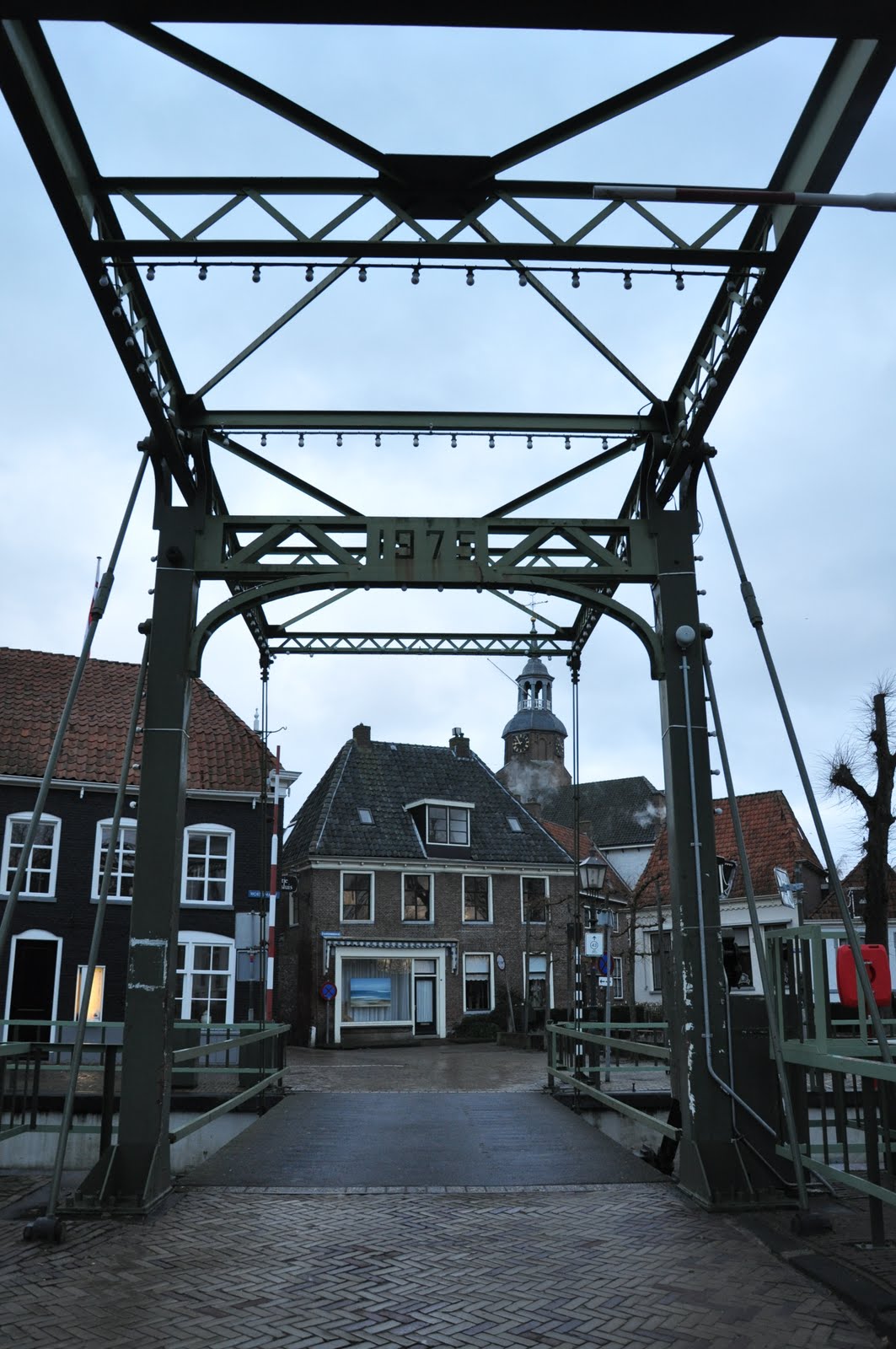
But we do love good food. So every week, we empty our wallets of whatever notes (Christmas money) and spare change (eating out) is left. At the end of the year, or whenever the jar gets too heavy, whichever comes first, we haul the coins to the bank, and get them counted. It adds up: in this case, to a trip to Kaatje aan de Sluijs, a little restaurant in Blokzijl, which is a little village in the middle of nowhere. Friends of ours had invited us along to help them celebrate their tenth anniversary, and good food and a luxe hotel for not-too-extravagant prices are not to be passed up. Blokzijl's claim to fame is that it used to be a seaside town, until the Dutch filled in their corner of the North Sea in the 1930s. Now, it sits behind a dike that was undoubtedly more impressive in the days when it actually held back the sea, but still squarely in the middle of nowhere, with endless polderlands stretching beyond it in all directions.


Nevertheless the village itself is a lovely little place, though hardly exciting by any definition of the word. There's an antique clock shop on the main street, and some nice little pubs, and of course a church (Baptist, interestingly). The little village still has the narrow streets of pre-car days, and there are no curtains in the windows, in keeping with the (now disappearing) Dutch tradition of making sure your neighbors are as virtuous as you are. You can sail on the river that runs through the village, though at this moment you might want to get ice insurance before you do.


At Kaatje aan de Sluis, you have the option of a four-course dinner menu; I assume that the restaurant also has an a la carte menu, but for whatever reason it wasn't available on the day that we went. We were greeted at the door by a grinning, almost bouncy, maitre'd, seated, and almost before we had a chance to get our bearings, a member of the wait staff came along and asked us what we'd like to have for a drink. A few minutes later, the first amuses arrived.


The dishes were served relatively quickly: at the Chateau Neercanne, for instance, it averaged out to one dish an hour (and yes, we were actually there for almost six hours). It was still 23.00 by the time we left, but it ended up being an almost-seven-course meal, including coffee, a pre-dessert, and lots of wine-snobbery, where the sommelier presents you with a bottle of wine, cradled in a towel (for whites), and gives you the genetic lineage of the grapes that went into it, and pours out a small measure of wine for the wine-master. In our case, that was the wife of our friend, and the wines that the staff had chosen really were very good, with a sweet nose but a complex taste. And that's about the extent of my wine knowledge.

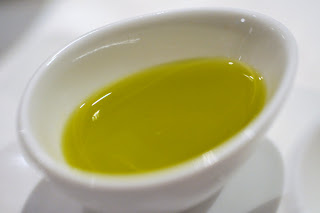
As for the food itself: well, pictures are worth a thousand words, right? Suffice it to say that the words, “Oh my God,” came out of my mouth more than once—and that was just about the olive oil to dip the bread in.


From top to bottom, the dishes are: foie gras , served with carmelized shallots and an orange-flavored cookie; the snoek (with cauliflower puree and potato square); wild duck served with sarsaparilla root, leek, red beet, and lentils); and dessert, a parfait of oranges, sweet-corn custard, almonds, and dragon-flavored ice cream, served alongside candied popcorn.


After such a gastronomic undertaking, we decided that a little coffee wouldn't be a bad idea. But that was with the assumption that coffee was just coffee. We're relatively new to fine dining, but we're learning: coffee is never “just coffee”.


I'm a vegetarian, which makes things a little awkward when foie gras and wild duck are the only items on the menu. Fortunately, our friends and my boyfriend were ravenous—they'd skipped their meals that day, too—so they were more than happy to relieve me of both of the items. I found myself trying some of them (both the foie gras and the duck) out of propriety, but after not having any meat for several years, the taste of them both were a bit much for me. However, I am assured by the three others at the table that, if you eat meat, you will love it.

The hotel we stayed in was “attached” to the restaurant, in the sense that if you ask for “dinner and a room” the Kaatje Hotel is where you will stay. It was just a short walk from the restaurant, the better, perhaps, to avoid drunken customers running amok on the streets of Blokzijl the night before church. The hotel room was nice enough—the bathrooms are stocked with thick fluffy towels and thicker, fluffier bathrobes. We had a stunning view of the river from our room. The only really annoying part was figuring out which light switches turned on what lights, and how the shower worked. The breakfast the next morning was very Dutch: a collection of breads, cheeses, sausage/ham slices. In a nod to healthy eating, yogurt and fruit were also available, but suffice it to say that there are more compelling reasons than breakfast to visit Blokzijl.


Overall it was a great night: good food, great company, excellent hotel. My boyfriend handled the money, so I'll have to take his word for the costs: €200 for our two dinners, and €190 for the night (the tab included breakfast and pre-dinner drinks). It's definitely one of those places that makes doing your own dishes 364 days of the year worthwhile. Kaatje aan de Sluijs is a member of the Gastronomique Alliance, a sort of restaurant guild for finer diners, so if you're not up to traveling to the middle of the nowhere for food, there's probably another Alliance member closer by.
Tuesday, June 8, 2010

Only the Dutch

I'm pretty laissez-faire about sharing stuff with roomies. I don't really mind people using my coffee maker when I'm not around, provided that they clean the machine afterwards. And I don't really mind buying toilet paper. As long as someone else takes care of these things from time to time, I'm cool.

But of course, if things were that simple then I wouldn't have a post: I technically live with my boyfriend (as in, his place is my address) but I keep an apartment in Maastricht, the better to not commute for 4 hours a day with. In May, I moved to my current setup, which is a house in a very snazzy neighborhood (Sint Pieters, or the Hill), owned by a lovely old couple who get rich off of renting the individual bedrooms of the house out to poor students. Well, okay, they can't possibly be getting rich at the prices they charge. But you get the point.

There's room in the house for 5 girls, but whoever lives in the huge space on the ground floor (what Americans--but not Pennsylvanians--call the first floor) has her own bathroom. The rest of us, 4 girls, have to share a bathroom, and everybody shares the kitchen. We've all sort of come to an unspoken agreement that we will not share food and that the Internet/TV gets split 4 ways regardless of how many tenants there are (currently just 3). A little harder to split evenly, in a manner that could be construed as "fair", is paying for trash bags and toilet paper.

Now, I'm not talking about the €1 trash can liners. Here in the Netherlands, the cities have special vuilniszakken (vile-ness sacks?) that you must place your trash in if it's to be collected. Said bags cost a pretty penny, too: in Nijmegen they're €5 for 10, but in Maastricht, they're €11.70 for the same number. If that sounds outrageous, consider that at least you don't have to pay a separate bill for garbage removal.

What makes this a tricky matter to negotiate is that I produce a comparatively huge quantity of waste: I eat ramen, buy things that come in plastic boxes, eat yogurt, and drink coffee, all of which generates a fair amount of trash that must be disposed of. My soon-to-be-former housemate (who's just finished her final exams and is now in Germany, and presumably celebrating) generates...well, I don't know how she does it, but I don't think I've ever seen her make a single speck of trash. So you begin to see why this matter can be a rather delicate calculus. Fortunately, my new housemate also cooks, cleans, eats, and all sorts of things that human beings do, and has said that she's perfectly happy to split the fee for the trash bags. The toilet-paper issue is a little less contentious--I consider €2.65 a cheap price for a non-stinky house.

And here is the point: yesterday my housemate introduced me to Wie Betaalt Wat, a website that tracks all of your common consumables in a shared household, and automatically divides by the people who share it, to show who owes how much. Quite a clever little site--it's not something that only the Dutch would think of (after all, roommates and roomie drama happen all over the world) but it is something that has a very nette feel to it. That last word, according to Google's Translator, means "neat", but like gezellig, there is an element of, well, Dutch-ness, to it that renders the site completely foreign even if you understood the language perfectly. Which is a rather long-winded way of saying that the site is very, indescribably, Dutch.

Saturday, February 13, 2010

To Dyson, or not to Dyson?

We've been thinking about getting a new vacuum cleaner for a little while, now. Translation: for a few years.

The problem is less with the vacuum iteslf, which still sucks and is quite adequate in the perpetual war against dust bunnies and Leto-fur. The problem is with the attachments. They are quite literally being held together with packaging tape.

So now, you might be thinking, "Well, just get new attachments, then!" The issue, though, is less with finding the attachments, which can be bought during the Saturday markt, than it is with the price of the attachments, which is quite literally more than the vacuum itself is worth. My boyfriend paid all of €40 for the vacuum and everything with it a few years back; I can sort of understand why he'd balk at paying €50 for a bunch of plastic pipes.

The more globally-oriented reader will know that although Europe lags behind the US in terms of what's available, nevertheless things from the US eventually filter across the pond and thus standards of living and what's available in the stores remain more or less constant. You may have to go to seven different stores rather than one Wal-Mart, but if you want it, it can be found.

Which brings us to the Dyson.

Dyson commercials first popped up here the year before last. I'm sure Dyson would have made it here earlier, given the Dutch penchant for cleanliness, but for the fact that developing the canister-type vacuum took a little longer. Uprights, for some reason, are not popular here at all--indeed, they're almost as rare as a dog without fleas. Of course Dyson charges an insane amount of money for their product, even here: €400 for the canister model, but it promises to pick up everything!

My boyfriend and I went into town today to look over what was available. It was interesting: most vacuums could be had for around €150. And then there was the Dyson, which was €400--a little less if the store had a sale. At the heart of the difficult was whether or not it was worth the insane amount of money to buy the damn thing.

We still haven't managed to answer that question yet.

Sunday, January 3, 2010

Skinflint

One of my resolutions that I'd made for this year was to only buy a new thing if I was replacing something old. Saturday? One of the things I bought was a laundry drying rack.

To be completely fair, this does replace one of the lines we have strung across the office/guest room. And we've been thinking of getting one for about a month, so it wasn't as if it were an unplanned purchase. We do a lot of laundry, between the sheets and towels and clothes. Or rather, it's not that we do do a lot of laundry per se, it's that we tend to procrastinate with it all week and then have to run 3-4 loads on Sunday. That's a function of our living arrangements and work schedules.

But it does mean that our two lines (the third gets in the way of the computer and so is rarely used) and single drying rack often get overwhelmed by sodden duds, and then they don't dry as quickly as they should, and then I'm left carting a bag of semi-dry clothes back to Maastricht, where they sit at my desk until I bring them home and unfurl them to dry completely. Where, thanks to the cold that is my apartment, they take their jolly good old time doing so.

In this respect our lives are atypical compared to an average Low Country bumpkin. It's not that we're too cheap for a dryer, which would be the usual reason for someone who chooses not to indulge in such luxuries. My boyfriend has shelled out more for a new slipcover (that the cats promptly tore up), and has spent enough money on oil lamps to buy several dryers. Name brand dryers, too. I think it's largely that, after 15 years (for him) and 3 years (for me) without one, well, you just don't get to missing such things after a while. And more practically, there's no room in our apartment for one.

Supposedly the Dutch are good with money, which is a polite way of saying that people here are tightwads. That is and isn't true--most of the people I know personally are happy to splurge on things like good food and cool toys. On the other hand, I've seen people get into a proper tizzy over being charged and extra 35 cents for a box of sprouts. It is true that heavy marketing tends to drive people away from products, though: I think the thinking is that if something needs that much press it must be defective somehow. But overall people are no better and no worse with their money than elsewhere, given the constraints of the system. It is harder to get a credit card here, and damn near impossible to use one in a store, so I suppose that makes it easier to watch one's pennies.

The one area that seems to be especially lucrative might be called "live action infomercials". I'm sure there's a word for it--"it" being the people who set up a stall in the market on market day and demonstrate the wonders of a new product that solves a problem you never knew you had--in Dutch but the word escapes me just now. These slick talkers slice, dice, floozee, hoover, and do all kinds of fantastic demonstrations with their New Gadget. The pitch, of course, is always that this Gadget is available only through them at the Unbelievably Affordable price of however-much-euros that it costs. For whatever reason there is always a crowd in front of the person, oohing and aahing as they show off a handful of finely sliced onions or a pretty string of beads held together by magnets. Oddly enough, I've never actually seen anybody buy anything from these people, but they're always around.

Friday, January 1, 2010

Coffee

It's said in The UnDutchables that Dutch society runs on coffee. This is only half true. The other half runs on tea, but that half has a strange way of treating it, as reusing teabags seems to be the standard and not just reserved for cheapskates. I'm convinced that most of the people here have no sense of taste, since most of hot brown liquid concoctions are farily insipid--but it's still better than the US, where the aforementioned drinks are more watery than Davy Jones's locker.

Be that as it may: this Christmas I received a coffee grinder, which is a handy thing to have as it means that I can finally buy beans rather than vacuum-sealed grinds that start to lose flavor within minutes of breaking the seal. Alas, coffee beans are only sold in snobby upscale coffee-chocolate-tea shops with names like Simon Levelt, or Van Hilst, and the varieties of coffee go far beyond Java and Kenya. You can have coffee from Ethiopia, Tanzania, Columbia, Guatemala, Mexico, light- or dark-roasted, infused or not. For someone who's only choices, until now, have been "red or not-red" (the national coffee preference, it seems, is coffee with red packaging--Douwe Egberts, the biggest coffee seller here, has a line called "Aroma Rood" that must make up something like 99% of the coffee purchased, and supermarkets take advantage of their distinctive red packaging to offer a generic coffee that's also packaged in red), the choices can be a rather mind-blowing lot.

Example, then: this morning I've had 3 cups of Tanzania Peaberry coffee, a "mild and aromatic" coffee from the special peaberry tree, which makes smaller beans and therefore more concentrated flavor...I think. As much as I ridicule wine writers for writing things like "there is a hint of strawberries in the initial bouquet", I must play the hypocrite here, for it is indeed a rather mild coffee, with less of that astringent tang, and there is a sweeteness to the brew that lets it sit gently on the tongue. It's remarkably easy to sound like a pompous snob when discoursing on the quality of one's drink. But this is Coffee, damn it, and coffee is serious business.

Such serious business, in fact, that I am trying to come to a decision as to whether or not to purchase Fair Trade beans. Fair Trade coffee (ground) is expensive, but for someone who only has a small pot in the mornings, buying small packages is good because then you can actually finish the package before the flavor is completely evaporated. But with beans, you don't have that problem--you do have to keep them in a cool dry place, but beans keep their flavor much longer and if you don't mind grinding them afresh every morning, you'll get a much yummier drink. I flatter myself to think that my palate can discern the difference between fresh-ground coffee and sludge--but really it's not very difficult. After having had fresh-ground coffee from the Cafe T, not even the best packaged grounds-coffee comes close to that little cup of heaven.

At issue with my dilemma over Fair Trade is the question of how much do the farmers get of my [ungodly price per kilo coffee]? It's hard to say, really. On the one hand Fair Trade is usually organic, which is worth a lot, given how many pesticides are used in farming coffee. On the other--well, giving farmers a living wage usually means only penny-increases in the cost per kilo of beans for the coffee companies, and certainly far less than the near-double price that FT coffee costs. Yes, I'm a bit of a tightwad in this respect--but on the other hand, I have rent and student loan payments to make, and nobody profits if I go broke.

So I guess the real question is: what is the worth of having the Perfect Coffee Experience every morning? Worth €12/kg (bare minimum) in beans? Never mind the "doing good" bit--if I'm paying that much for coffee it will be because I can have the PCE, but if it helps out a farmer somewhere, all the better. For now (that is, until we finish the bag of Van Hilst Tanzania Peaberry) I'm starting to think that it could very well be worth the cost to have such excellent coffee.